
How Christian kindness can change your life, the workplace, and the world—a Scriptural study guide
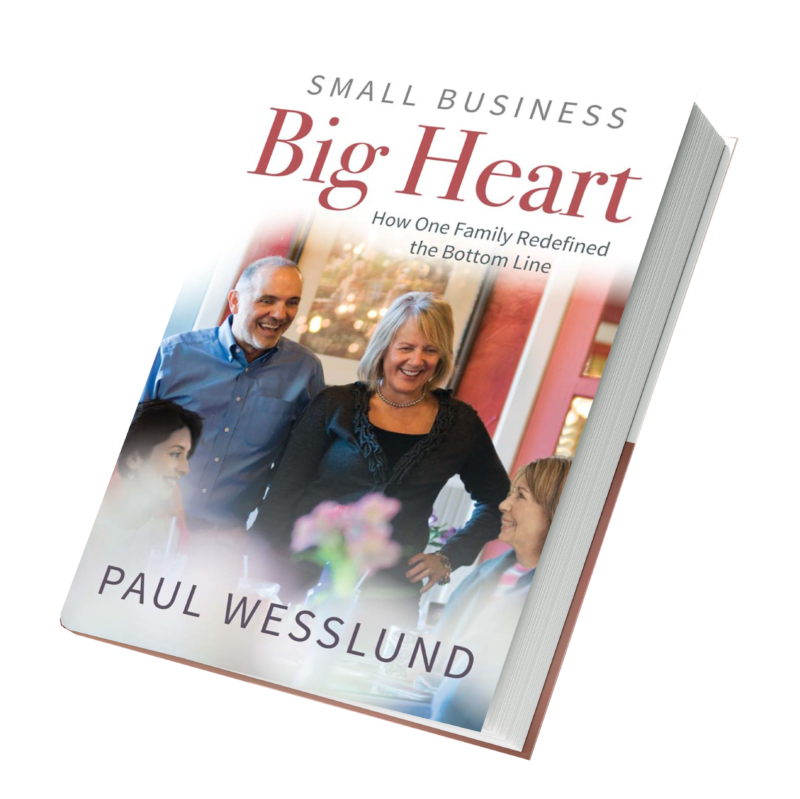
When I wrote a book about a couple who found business success by following their faith in how they managed their restaurant, their inspiring story called out to be shared with Bible study and Sunday school classes. So I wrote Christianity at Work, a 6-lesson companion to Small Business, Big Heart—How One Family Redefined the Bottom Line.
Christianity at Work can serve as a stand-alone guide for bringing faith into today’s everyday life. Or for a deeper experience it can be paired with its companion book.
Small Business, Big Heart even includes recipes from Sal and Cindy Rubino’s restaurant.
At a time when harshness and divisiveness seem too common, everywhere from family gatherings to grocery store checkout lines, Christianity at Work shows there’s a better way. The guide’s chapters and discussion questions will have your group talking about lessons as big as Micah, “what does the Lord require of you?” or as down to earth as Ephesians, “Obscene language, silly talk, or vulgar jokes aren’t acceptable for believers.”
Christianity at Work is available in paperback or ebook.

From My Blog

A Talking Heads Tribute Isn’t The Best Album Of 2024, But It Is My Favorite
How a 40-year-old movie is still making sense My favorite[...]

A sickening, but sadly fitting, way to end a football game
From sports to politics, we celebrate hate I sat down[...]

Road Rage? It’s More Like Everywhere Rage
What speeding says about our angry mood, and a hint[...]
![Picasso’s Guernica reproduced in Guernica City Hall in Germany (photo by Moleskine [CC BY-SA 4.0] via Wikimedia Commons)](https://paulwesslund.com/wp-content/uploads/2024/03/Guernica_Rathaus_PF.jpg)
A Trump/Stormy Daniels legal brief reads like a disturbing work of literature
Gag order request offers evidence of how mean we are[...]
PURCHASE PAUL’S BOOK TODAY!
NOW AVAILABLE ON AMAZON AND AUDIBLE
We’re told that to succeed you have to be tough. But there’s better way. Compassion, community, giving second chances, and listening to others actually works in life and in business. Small Business, Big Heart tells the inspirational story of Sal and Cindy Rubino, restaurant owners whose marriage was nearly destroyed by that brutal business.